Computational Biophysical Chemistry · SNBNCBS · Est. 2023

Molecular Level
Understanding of
Bio-Molecules

Abdul Aziz Mandal — Research Scholar

Working at the intersection of computational chemistry, biophysics, and machine learning to unravel molecular aggregation pathways and interactions of complex biological systems at S.N. Bose National Centre for Basic Sciences, Kolkata.
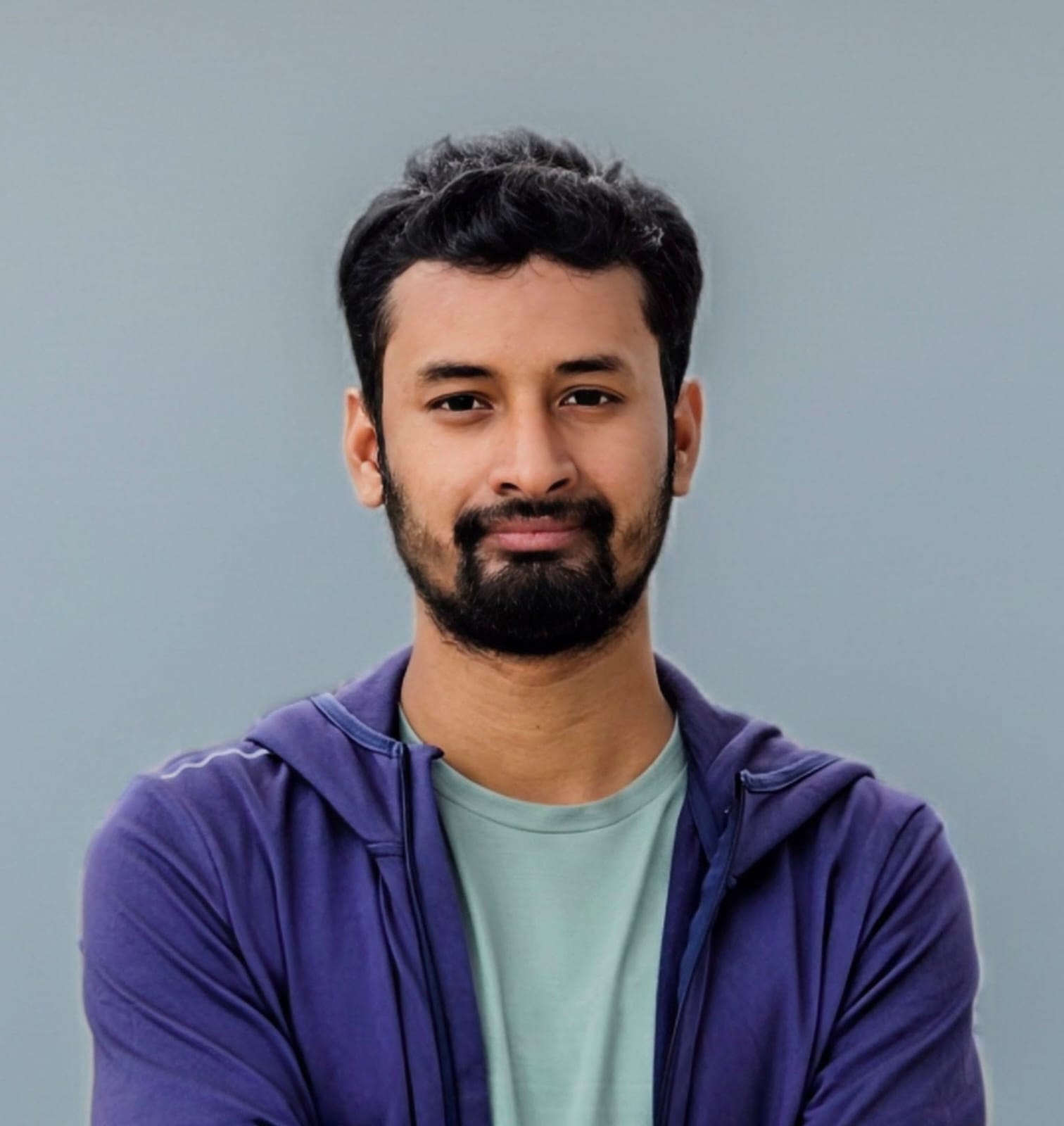
Abdul Aziz Mandal
PhD Scholar, S. N. Bose National Centre for Basic Sciences
Kolkata, India
MD Simulation · ML · Enhanced Sampling
Scroll


I am a Research Scholar in Computational Chemistry (MD Simulation) at the S. N. Bose National Centre for Basic Sciences (SNBNCBS), Kolkata. My work sits at the intersection of physical chemistry, biophysics, and computational science.

My research aims to unravel the molecular aggregation pathways and molecular interactions of small molecules in complex biological systems — particularly disease-linked peptide and protein aggregation processes and their modulation by small organic molecules and metal ions.

I am currently developing expertise in machine learning potentials and enhanced-sampling techniques to push the boundaries of what classical MD simulations can reveal about biological systems.

Amyloid Aggregation MD Simulation Free Energy Methods Machine Learning Methods (AI/ML) Enhanced Sampling Small Molecule Inhibition Biophysics

Academic Qualifications

2023–
Present
Ph.D. in Computational Chemistry
S. N. Bose National Centre for Basic Sciences, Kolkata (Affiliation: Jadavpur University)
Supervisor: Prof. Ranjit Biswas
Focus: Molecular Thermodynamics and Kinetics of Some Disease- linked Peptide and Protein Aggregation Processes: Modulation by Small Organic Molecules and Metal Ions.
2020–
2022
M.Sc. in Chemistry
University of Calcutta, Kolkata (Campus: Rajabazar Science College)
Specialization: Physical Chemistry
Supervisor: Prof. Swapan Chakrabarti
Focus: This project is on “Quantum Cryptography: An IBMQ Experience”. This Quantum Cryptography is a kind of encryption method uses quantum mechanics properties to secure and transfer data in a way that can’t be hacked. In current progress quantum computers will be able to break public encryption key easily.
2017–
2020
B.Sc. in Chemistry (Hons.)
Maulana Azad College, Kolkata (Affiliation: University of Calcutta)
2016–
2017
Higher Secondary Education
Tapan High School, Tapan (Affiliation: WBCHSE)
2014–
2015
Secondary Education
Tapan High School, Tapan (Affiliation: WBBSE)

Honours & Recognition

2023
Inspire Fellowship
Awarded junior research fellowship (JRF) for doctoral studies at SNBNCBS, Kolkata.
2017
Inspire Scholarship
Awarded for coming under top 1% students Higher Secondary Examination in West Bengal
Coming Soon
Conference Presentation
Replace with conference name, title, location, and year.
Coming Soon
Certification
Replace with course/certification name and issuing organization.
🔬

Amyloid Aggregation & Inhibition

Exploring the aggregation pathways of disease-linked proteins and peptides (Alzheimer's, Parkinson's) and mechanistic inhibition by small molecules and metal ions using atomistic MD simulations.

Computational Biology
⚙️

Machine Learning & Enhanced Sampling

Developing expertise in ML-based force fields and enhanced sampling methods — metadynamics, replica exchange, OPES — to access timescales beyond classical MD.

ML / AI
💧

Solvation & Hydration

Investigating the role of water structure and solvation dynamics in modulating protein stability, aggregation, and small-molecule binding thermodynamics.

Physical Chemistry
📐

Protein–Ligand Interactions

Studying binding affinities and interaction mechanisms of small organic molecules with aggregation-prone proteins using docking and free-energy perturbation methods.

MD Simulations
🌀

Intrinsically Disordered Proteins

Characterising the conformational ensemble and aggregation propensity of intrinsically disordered regions using all-atom simulations.

Biophysics
🧮

Free Energy Methods

Learning and applying umbrella sampling, metadynamics, thermodynamic integration, and MBAR to compute binding free energies and conformational free energy landscapes.

Statistical Mechanics
GROMACS
AMBER
🐍Python
Julia
📊MDAnalysis
🔭VMD
🧬PLUMED
🤖DeePMD
📐AutoDock
📈NumPy / SciPy
✏️ To update this page: edit the research-card blocks above to add/modify your focus areas. Add new tools to the tools-grid div as you learn them.
✏️ To add a publication: copy a <li class="pub-item"> block, paste it inside <ul class="pub-list">, and fill in year, title, authors, journal, and DOI link.
👤
Principal Investigator
Prof. Ranjit Biswas
Professor at S.N. Bose National Centre for Basic Sciences. Research interests span ultrafast spectroscopy, ionic liquids, and biophysical chemistry of complex systems.
Lab Website →
👤
Mentor
Suman Chakrabarty
Guiding research direction and simulation methodology.
👤
Senior (Guidance)
Sudipta Mitra
Senior lab member providing methodological guidance.
👤
Me
Abdul Aziz Mandal
PhD student working on computational biophysical chemistry.
✏️ To add a team member: copy a team-card div, paste inside team-grid, and update name, role, initials/photo, and description. To add a photo: place <img src="member.jpg" alt="Name"> inside the team-photo div.

Positions will be listed here as they open. If you are interested in computational biophysics, molecular dynamics, or ML-driven simulation methods, feel free to reach out.

Coming Soon

Comin Soon

Comin Soon

Coming Soon

Comin Soon

Comin Soon

Open

Short-term Projects

Interested in a project collaboration, summer internship, or research visit? Write to me with your background and interests.

✏️ To add a collaborator: copy a collab-card <a> block, paste inside collab-grid, and update the initials, name, institution, and href link.
📍
Address
Department of Chemical & Biological Sciences
S. N. Bose National Centre for Basic Sciences
JD Block, Sector III, Salt Lake
Kolkata — 700 106, West Bengal, India
✉️
Email (Personal)
✉️
Email (Institute)
📞
Phone
+91-XX-XXXX-XXXX
🔬
Institution

Interested in Collaborating?

I am open to research collaborations, seminar invitations, and discussions on computational biophysical chemistry. Graduate students and postdocs interested in joining are also welcome to write.

Please include a brief description of your background and what you'd like to work on. I typically respond within 3–5 working days.

Send an Email